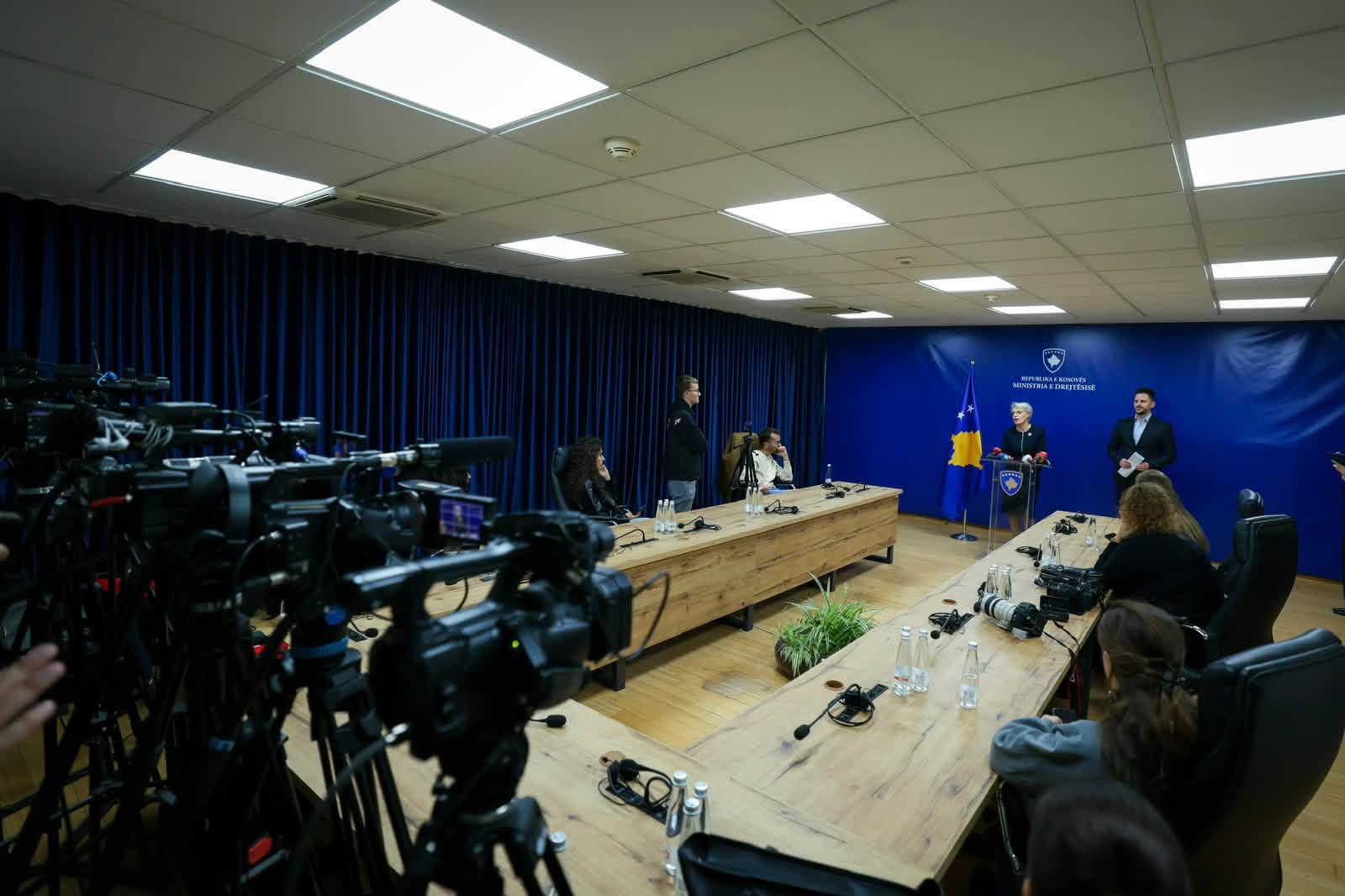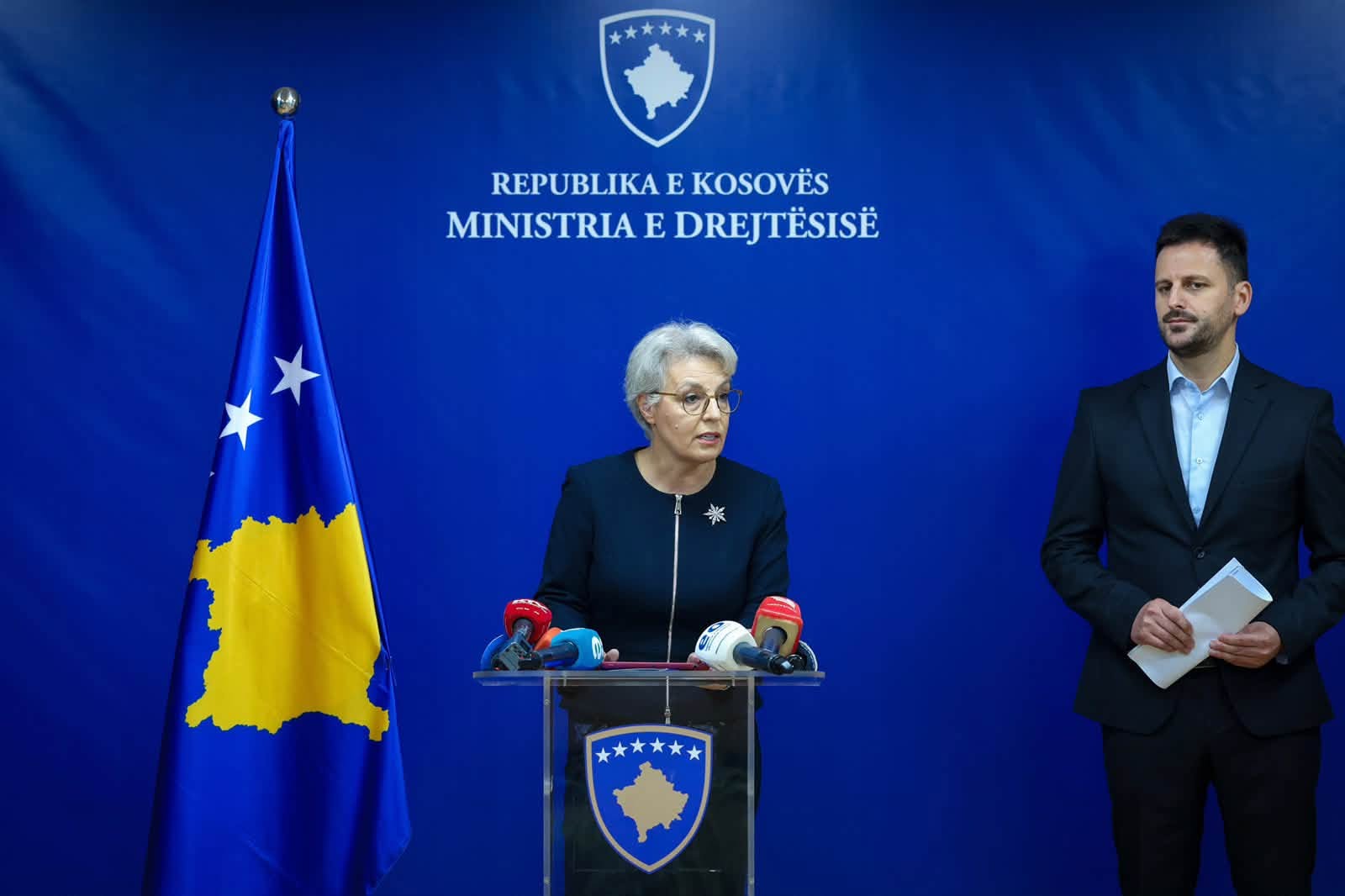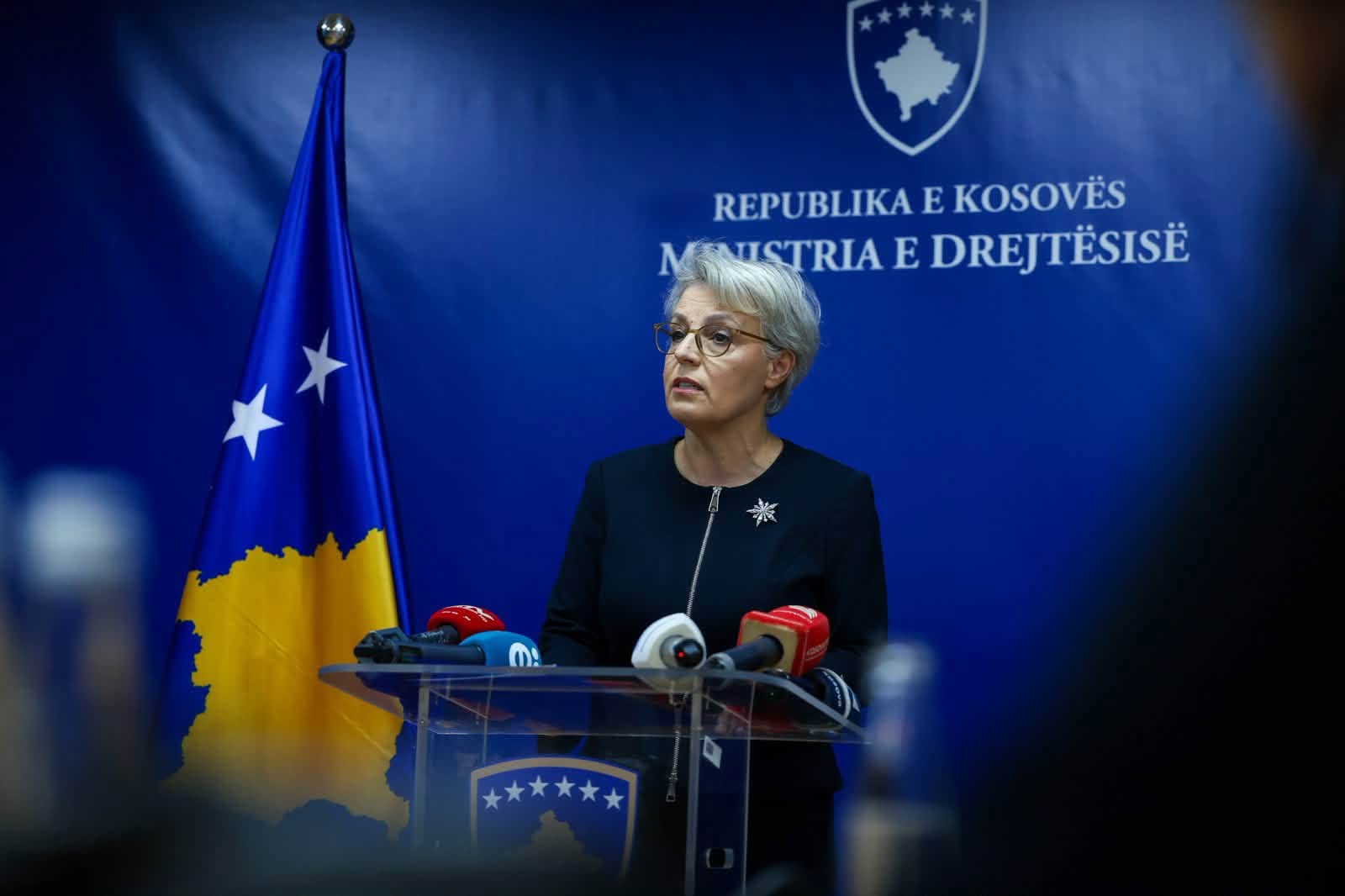
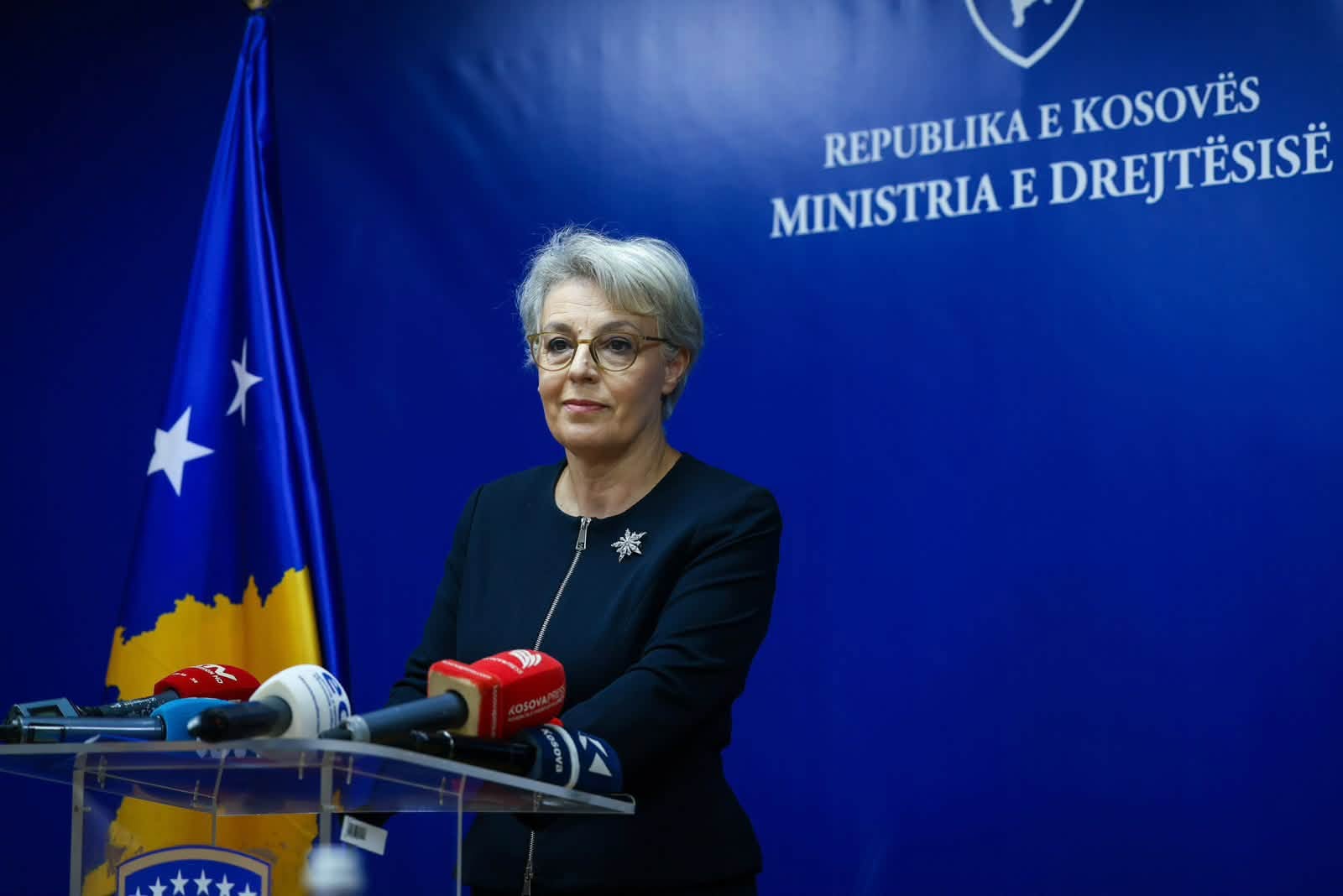
Full remarks by Deputy Prime Minister and Minister of Justice Donika Gërvalla at the press conference
Prishtina,
26/09/2026
Distinguished media representatives, thank you very much for your presence and your great interest on today’s day,
Dear citizens of the Republic of Kosovo,
Let me begin by noting that today—as we rightly, and with great emotion and dedication, discuss our past and our history—we should also recall two specific dates and anniversaries.
On September 26, 1998, in Upper Abri, was committed one of the most brutal massacres by genocidal Serbia: the killing of 23 members of the Deliu family. This fact is as undeniable as the truth about our liberation war. None of this brutal massacre perpetrators have been punished to date.
September 26, 1991, also marks the beginning of the voting for the Referendum on Kosovo’s Independence lasting until September 30 in which over 90% of the citizens declared Kosovo an independent republic. The referendum was also organized in Tirana, in a modest office. Thousands of Kosovo citizens voted for independence in that very office. I feel very proud and privileged to have co-organized and led this important process.
Today, the Republic of Kosovo is an independent and sovereign state, internationally recognized. The challenges we face even nowadays require coordination among us all on matters concerning the state, constitutionality, history, and our shared future.
Most matters related to the Specialist Chambers are matters of high expertise. Great care is needed to make sure no mistake is made. Experts at the Ministry of Justice are currently analyzing the draft law proposed by the Democratic Party of Kosovo. Once ready, we will submit it to the government. We will not delay—we will send it soon—but neither do we wish to rush and produce something full of flaws and poor quality.
More than words, we need cooperation, coordination, analysis, and expertise to ensure that justice prevails.
Following an immense effort across the entire justice system, yesterday, in my capacity as Minister of Justice, I submitted to the Government six laws for a vote and, having been approved by the Government, they are ready to be sent to the Assembly.
These six laws form the foundation of the deep justice system reform as promised to citizens of the Republic of Kosovo.
The Law on the Bureau has been extensively debated—having taken shape as early as December 2021, a few months after the then Minister of Justice Albulena Haxhiu had taken office. It passed through the Kosovo Assembly three times, undergone review by the Venice Commission and the Constitutional Court twice, and through several rounds of public consultation. The recent one took place this year.
The package of five reform laws is being submitted to the Kosovo Assembly for the first time. This reform is part of the Joint Commitment Declaration signed by the Ministry of Justice, the judiciary, and the prosecution office. It aims to ensure the efficiency, professionalism, integrity, and accountability of judges and prosecutors, aligning with the Venice Commission’s recommendations—specifically the 2024 Opinions—as well as the TAIEX (EU) opinions from 2026.
To illustrate this, I will briefly focus on the Law on the Recruitment, Performance Evaluation, Integrity Control, and Status of Judges and Prosecutors; providing that recruitment shall take place only after a specific vetting process for candidates, covering criminal records, bank accounts, property registers, past employment history, and information from civil society.
Regarding performance evaluation, the law prioritizes qualitative criteria, such as:
– knowledge of applicable legislation
– skills in conducting judicial and investigative proceedings
– capacity for legal analysis and reasoning
– communication skills
– use of information technology tools.
The law also provides for specific criteria for evaluating the performance of court presidents and chief prosecutors, based on work organization and work leadership, the efficiency and transparency of the court or prosecutor’s office, and their personal competencies. The law also provides for the possibility of appealing a judge’s or prosecutor’s performance assessment directly to the Supreme Court. For the first time, the law provides that judges and prosecutors may be dismissed due to poor performance assessments, while any imposed disciplinary measures will be taken into account when upgrading them.
In addition, judges and prosecutors will be dismissed if it is established that they own unjustified assets, since the law provides for the integrity control also —which includes a comprehensive review of the assets held by every judge and prosecutor every three year.
However, the law not only provides for high quality performance and integrity criteria but also ensures greater security for judges and prosecutors. In this regard, the new law provides for special protection measures for judges and prosecutors—as well as their families—in the event of any threat. Furthermore, the new law stipulates that the transfer of judges to another court, or prosecutors to another prosecution office, may only take place based on strict legal criteria aimed at enhancing the efficiency of the respective court or prosecution office, thereby protecting judges and prosecutors from arbitrary decisions. It also allows for the assignment of mobile judges to assist specific court branches when they face unforeseeable caseload surges during certain periods.
- The Draft Law on the Disciplinary Liability of Judges and Prosecutors establishes a link between violations and disciplinary measures, i, e proportional measure taken for any the specific violation committed by the judge or prosecutor. The imposed disciplinary measures are recorded and made public by the KJC and the KPC. Repeating a minor disciplinary violation is classified a serious disciplinary violation.
A new feature is the designation of the KJC and KPC as the competent authorities for handling notifications of disciplinary violations, replacing the previous authority held by court presidents and chief prosecutors. The Kosovo Judicial Council and the Kosovo Prosecutorial Council will each appoint nine (9) judges and nine (9) prosecutors, respectively, to serve on investigative panels for five-year terms, thereby enabling their specialization and ensuring a more efficient handling of disciplinary cases.
- The Draft Law on Amending and Supplementing the Law on the Kosovo Judicial Council provides that only judges with good performance assessment may run for office, and voting by all judges for member judges at the conference of Judges at the Council, ensuring candidates with broad support, rather than from courts of same level as before. The Performance Assessment Commission will be composed of judges from higher court levels and will include one (1) non-judge member. Disciplinary violations will also be determined for members of the Kosovo Judicial Council and the Kosovo Prosecutorial Council, respectively.
Furthermore, the new law provides for the possibility of re-electing court presidents for an additional term.
Meanwhile, “Inspection Unit” within the Council will be restructured into an “Inspection and Verification Unit” with expanded powers regarding the recruitment, performance, and judges’ disciplinary procedures.
- The fourth law in the package is the Draft Law on amending and supplementing the Law on the Kosovo Prosecutorial Council—following a successful legal reform in 2025—which contains additional amendments substantively similar to those mentioned for the Judicial Council, thereby serving to unify the laws and practices of the judicial system as a whole.
- The Draft Law on the Academy of Justice provides for the increasing of the number to the Program Council members, including specialized judges and prosecutors, jurisprudence professors and experts, while ensuring the professional and programmatic autonomy of the Program Council. Defining the types of training—including continuous and specialized training for judges and prosecutors, as well as joint training with other justice system professionals (state attorneys, lawyers, notaries, private enforcement agents, mediators, bankruptcy administrators, and other public institution officials); establishing clear procedures and criteria for evaluating judges and prosecutors during initial training, while guaranteeing the right to appeal; creating a system to evaluate the performance of trainers and mentors; and legally defining the categories of the Academy’s research and publishing activities—specifying the types and clear criteria for their development, as well as regulating the status and employment terms of Academy staff—are some of the aspects of this law we have chosen to highlight.
These draft laws will facilitate better work organization and management, as well as greater professionalism within courts and prosecution offices. However, the Kosovo Judicial Council (KJC) and the Kosovo Prosecutorial Council (KPC) must certainly take implementation measures as well. Those who fail to perform as provide for under these draft laws will be removed from the system!
No doubt, the Ministry of Justice will also explore all possibilities for continuous budget increases to increase the judiciary and the prosecution service’s resources.
Another piece of excellent news is that we are submitting the Law on the Bureau to the Assembly. Since the previous term, this Law has undergone minor revisions and has once again been subject to public consultation. The draft law submitted to the Assembly should be viewed as being an outcome of a comprehensive process. It has gone through several drafting stages and revision; it has been assessed by the Venice Commission; it has been reviewed by the Constitutional Court; it has been amended based on its findings, and reopened for public consultation with civil society comments being largely into account.
The official initiative to establish this mechanism dates back to 2020 and has been part of broader justice reforms, the rule of law, and the fight against corruption. The aim was to provide Kosovo with an additional instrument to address cases where there is a significant discrepancy between a public official’s assets and their lawful income, but where existing criminal prosecution mechanisms are insufficient to enable the confiscation of such assets.
From the outset, we have been aware of a new and sensitive mechanism, which is supposed to establish a right balance between the public interest in combating unjustified wealth and the protection of individual rights. Maintaining that balance was one of the guiding principles in drafting the draft law. While the state must have an effective instrument to verify cases where a public official’s assets cannot be explained by their lawful income, no one may be deprived of their assets merely based on suspicion, an administrative assessment, or a decision by the Bureau itself.
The Ministry of Justice has ensured that this draft law undergoes an extensive and ongoing process of review and expert analysis, aiming to align the proposed solutions with the Constitution, international standards, and guarantees for the protection of fundamental rights. A crucial step was submitting the draft law to the Venice Commission for an opinion; the Commission examined not only the text of the draft law but also the very concept of civil confiscation in the absence of a prior criminal conviction.
I wish to highlight in particular an element that is sometimes overlooked in the public debate surrounding this law.
This law does not establish a criminal mechanism, and the Bureau does not confiscate assets.
What the draft law does is provide for a civil procedure to be conducted before a court, including a standard determined by proof and the right of appeal. The Bureau plays a preparatory and analytical role: it collects, analyzes, and verifies data and, upon determining that the legal conditions are met, presents the case to the court. The Bureau itself does not make the decision regarding confiscation.
The final decision on the confiscation of assets is made exclusively by the court.
The person who is subject to the proceedings has the right to present their own evidence, contest the claims and evidence submitted by the Bureau, and exercise legal remedies provided by law. This is one of the fundamental guarantees upon which this mechanism is built.
But why are the citizens of our Republic awaiting this law with such anticipation?
Because Kosovo can’t tolerate an unjustified property becoming the norm, can’t tolerate the corruption prevailing over the rule of law, public assets ending up in private pockets, or the just and honest persons ending up as losers.
The Law on the State Bureau for the Verification and Confiscation of Unjustified Assets will serve as a strong guarantee against this.
I am certain these laws have helped laying the foundation for the most profound reform of the justice system in the Republic of Kosovo.
I am convinced that the Assembly shares this view as well and will facilitate a review process that is both careful and expeditious.
The citizens of our country have been waiting for this for many years. They, too, have the right to enjoy justice that is equal for all.
Thank you very much for your attention, and for your patience regarding these lengthy explanations of laws that will be essential for our country.
Foto Galeria